On this page 10 sections
- Is there science behind VapoCept Capsules?
- What would "clinically studied" need to mean?
- How should you read ingredient research?
- What does the research say about L-arginine?
- What does the research say about L-citrulline?
- What does the research say about niacin?
- What does the research say about beta-alanine and calcium?
- How do the reported amounts compare with NIH reference points?
- What does each source cover, and what does it leave out?
- FAQ
There is no VapoCept science to report yet: we found no study of VapoCept Capsules, so this page covers only what NIH and other sources say about each reported ingredient on its own. That research mostly looked at other uses and other amounts, not at the capsule.
Below we go ingredient by ingredient, then through what NCCIH and NIA say about memory supplements, and finally through the question of which formula you may be holding.
Is there science behind VapoCept Capsules?
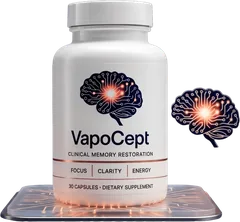
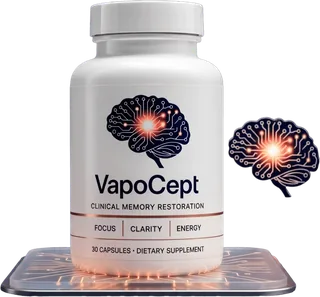
We found no study of VapoCept Capsules, so we cannot point to science about the product itself. The bottle photos show "Clinical Memory Restoration" printed on the front, and we read that as the seller's wording.
We could not load the official VapoCept page (vapocept.com) on November 26, 2026, so we could not check whether it cites a study. Two paid advertorials that describe the page and the label report the ingredients and the policies, and neither is described as testing the product1,2.
What does exist is research and fact sheets on single ingredients. Reading them takes care, because a finding about one ingredient, in a different amount and often for a different purpose, is not a finding about a seven-ingredient capsule.
What would "clinically studied" need to mean?
It would need a well-designed study of the same product, or an essentially equivalent one, measured in people. The FTC says health claims must be backed by competent and reliable scientific evidence, generally randomized controlled trials on the product or an essentially equivalent one3.
The FTC also says testimonials cannot substitute for that evidence3. So a customer story, however sincere, does not count as a study. We found no such study of VapoCept Capsules, and our benefits page lists where the wording appears.
| Item | What the sources say |
|---|---|
| L-arginine | Memory uses not discussed; blood-flow evidence is for leg artery disease (MedlinePlus) |
| L-citrulline | Not much evidence; safety not confirmed (NIH ODS) |
| Beta-alanine | Mixed evidence for short intense exercise (NIH ODS) |
| Niacin | An essential vitamin with set daily needs (NIH ODS) |
| Supplements for memory | Direct evidence for stopping dementia is lacking (NCCIH) |
| VapoCept itself | No study found |
Research covers each ingredient alone, usually for other uses and at other amounts.
How should you read ingredient research?
Read it as background on the ingredient, never as a verdict on the product. Five questions keep the reading honest:
- Was the study about this ingredient alone, or a mix like the capsule?
- Was the use the same as the one the seller suggests, or a different one such as exercise or blood pressure?
- Was the amount close to the label, and did the source say how it was given?
- Were the people studied like you, and did they take other medicines?
- Does the source itself call the evidence strong, or does it say "little" or "not much"?
Our sources often answer the last question plainly. ODS describes the evidence for arginine and citrulline as "little" and "not much" for performance4, and MedlinePlus does not discuss memory uses of arginine at all5. A careful reader stops there and does not fill the gap with hope.
Order
VapoCept Capsules packages and prices
Prices reported for the official checkout and in the owner pack, when we checked on November 26, 2026; confirm at the live checkout. Order links here open vapocept.com, the sales page named in the owner pack; it did not load for us, so check it before you pay.
Pick a package to see the total, cost per day, run-out date and the day-60 date.
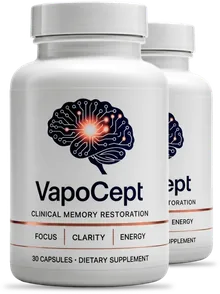
2 bottles
60 capsules · 60 days at 1 a day
$79per bottle
- Total
- $158
- Per day
- $2.63
- Shipping
- $9.99 shipping reported
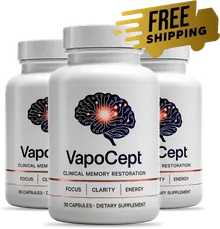
3 bottles
90 capsules · 90 days at 1 a day
$69per bottle
- Total
- $207
- Per day
- $2.30
- Shipping
- Free U.S. shipping
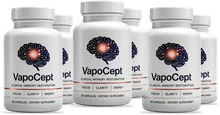
6 bottles
180 capsules · 180 days at 1 a day
$49per bottle
- Total
- $294
- Per day
- $1.63
- Shipping
- Free U.S. shipping
- Ask first if you take medicineBlood pressure medicine, a blood thinner, sildenafil, diabetes or thyroid medicine: L-arginine and calcium carbonate are on the reported label.
- Pick a package30 capsules a bottle, one a day by the reported label. 3 and 6 bottles ship free in the U.S.; $9.99 shipping is reported on 2.
- Read the totalCheck the address bar, the retailer name, the total and any add-on box. Crossed-out prices are the seller's reference figures.
- Mark day 60Plan on 60 days from the purchase date: the reported policies disagree on the start date. Keep the receipt and the tracking email.


 Badges supplied by the seller, shown as supplied. None names a certifying body, lab or number; what each one would need to mean is on the badges page.
 Payment logos come from the seller's pack; we could not confirm which methods the checkout accepts. Order links are marked sponsored. If you take blood pressure medicine or a blood thinner, ask your doctor first.
What does the research say about L-arginine?
MedlinePlus does not discuss memory or cognition uses for L-arginine5. It lists the ingredient as possibly effective for blood flow in peripheral arterial disease and for high blood pressure, and says it is possibly safe for most people when taken short term5.
That research studied arginine on its own, usually for other uses and at other amounts, not VapoCept Capsules. MedlinePlus says adults have most often used 1.5 to 24 grams daily in studies5. Study amounts were measured in grams, and we do not set them beside the capsule's amounts, because that would suggest an answer nobody has tested.
The NIH Office of Dietary Supplements says there is "little scientific evidence" for strength, performance or recovery, and that higher amounts can cause stomach upset and may slightly lower blood pressure4. See our L-arginine page for the cautions in full.
What does the research say about L-citrulline?
The NIH Office of Dietary Supplements says there is "not much scientific evidence" that citrulline helps performance, and that there is not enough research to confirm it is safe4. Some people report stomach discomfort4.
We could not load a MedlinePlus page for citrulline, so we say no more than that. The body can convert citrulline to arginine, which is why the reported label pairs the two. Because arginine is in the same capsule, the arginine cautions apply as well.
| Ingredient | Per capsule |
|---|---|
| L-arginine (base) | 200 mg |
| L-arginine AKG 2:1 | 200 mg |
| L-citrulline HCl | 100 mg |
| L-citrulline malate | 100 mg |
| Beta-alanine | 40 mg |
| Calcium (carbonate) | 18 mg |
| Niacin | 7.5 mg NE |
Other VapoCept pages describe different formulas. Compare with the panel on your bottle.
What does the research say about niacin?
NIH says adults need 14 mg NE (women) or 16 mg NE (men) a day, and sets an upper limit of 35 mg a day from supplements6. Supplements with 30 mg or more of nicotinic acid can cause flushing, headaches, rashes and dizziness6.
The reported label lists 7.5 mg NE per capsule1, which is about 47 to 54% of those daily amounts and about a fifth of the upper limit (our math). Add any niacin from a multivitamin or other products. Our niacin page shows how.
What does the research say about beta-alanine and calcium?
For beta-alanine, NIH reports small gains in short, high-intensity activities with mixed results, and says doses of 800 mg or more can cause tingling of the face, neck, hands and upper body, called paresthesia4. It is unknown whether daily use beyond several months is safe4. The reported 40 mg is one-twentieth of 800 mg (our math).
For calcium, adults need 1,000 to 1,200 mg a day, and the reported 18 mg is under 2% of that (our math)7. Levothyroxine is not absorbed well when taken within 4 hours of a calcium carbonate supplement, and quinolone antibiotics within 2 hours of a calcium supplement7. Ask a pharmacist about timing.
How do the reported amounts compare with NIH reference points?
The tool below puts the seven reported amounts next to NIH reference points, so you can see the sizes in context. It does not recommend more than the label, and it is not a measure of whether the capsule works.
ToolLabel ledger: what one capsule adds up to
The seven amounts reported for the label, set against NIH reference points. Step the capsule count to see the totals; the reported label says one a day, and nothing here suggests taking more.
This tool needs JavaScript turned on.
What does each source cover, and what does it leave out?
Each source covers an ingredient on its own and leaves out the product. The table lists what we found.
| Ingredient (reported per capsule) | Source | What it covers | What it does not cover |
|---|---|---|---|
| L-arginine 400 mg in two forms | MedlinePlus5, ODS4 | Uses, side effects, interactions, exercise evidence | Memory uses; the capsule |
| L-citrulline 200 mg in two forms | ODS4 | Little evidence for performance; safety not confirmed | Memory uses; the capsule |
| Niacin 7.5 mg NE | ODS6 | Daily needs, upper limit, flushing | Memory uses; the capsule |
| Beta-alanine 40 mg | ODS4 | Mixed exercise results, tingling at 800 mg or more | Memory uses; the capsule |
| Calcium 18 mg | ODS7 | Daily needs, medicine timing | Memory uses; the capsule |
Notice the last column. No row has a memory study of the capsule, and no row has a study of the seven-ingredient mix taken together. If a seller sends you a study, check which ingredient or product it names, which amount it used and which outcome it measured, then compare those details with the panel on your bottle and with the sources above.
What do NCCIH and NIA say about memory and supplements?
NCCIH says many dietary supplements are promoted with claims about memory and brain function, but direct evidence that supplements can stop Alzheimer's disease or other forms of dementia is lacking8. It also says "natural" does not always mean safe, and that some supplements interact with medicines8.
The National Institute on Aging says mild forgetfulness is common and dementia is not a normal part of aging9. Some memory problems come from treatable conditions, such as medicine side effects, low vitamin B12, thyroid problems, depression or anxiety, and sleep problems9.
If memory changes are new, getting worse or affecting daily tasks, see a doctor. A supplement is not a substitute for that check. Read more on our memory claims page.
Which formula does this science page describe?
It describes the seven-ingredient label reported by an advertorial that reviewed the official page and by the owner pack1. We could not see a Supplement Facts photo or load vapocept.com, so we cannot confirm which formula ships.
Other VapoCept pages describe different formulas. A paid press release describes a version with glucosamine, ginkgo, turmeric, marigold, green tea and bamboo extracts10. If your bottle differs from the label described here, the bottle wins and the ingredient research above may not apply to it. Compare the panel before you take anything, and ask the seller in writing which formula you will receive. Our ingredients page lists the seven reported amounts.
If you take a blood pressure medicine, a blood thinner, sildenafil or a diabetes medicine, have had a recent heart attack, have kidney disease or have surgery within 2 weeks, ask your doctor before using VapoCept Capsules. MedlinePlus says L-arginine may lower blood pressure, interacts with those medicines and should not be taken after a recent heart attack5. Never start, change or stop a medicine because of this page.
Frequently asked questions
What is the VapoCept science?
There is none on the product itself that we could find. The research we cite covers single ingredients such as arginine, citrulline, niacin, beta-alanine and calcium, usually for other uses and at other amounts.
Are there VapoCept studies?
Is there a VapoCept clinical trial?
We found none. The FTC says health claims generally need randomized controlled trials on the product or an essentially equivalent one3.
What does VapoCept research say about the ingredients?
It says different things for each one, and none of it studied the capsule. Our table above lists the source for each reported ingredient, and the amounts and uses studied are not those of the product.
Is VapoCept proven?
No source we use shows it is, and we found no study of the product. NCCIH says direct evidence that supplements can stop dementia is lacking8.
Sources for this page
D1 = the official VapoCept page (did not load for us). D2–D4 = paid advertorials and a press release that describe VapoCept pages and labels. S = U.S. government and NIH sources.
- D2 VapoCept Reviews 2026: Could This Be the Non-Stimulant Focus-Support Upgrade (paid advertorial, August 26, 2026). Newswire (paid advertorial). www.newswire.com/news/vapocept-reviews-2026-could-this-be-the-non-stimulant-focus-support-upgrade
- D3 VapoCept Reviews 2026: Why Buyers Are Taking a Second Look at the Six-Ingredient Formula (paid advertorial, September 11, 2026). Newswire (paid advertorial). www.newswire.com/news/vapocept-reviews-2026-why-buyers-are-taking-a-second-look-at-the-six-ingredient
- S13 Health Products Compliance Guidance. Federal Trade Commission. www.ftc.gov/business-guidance/resources/health-products-compliance-guidance
- S2 Dietary Supplements for Exercise and Athletic Performance (Fact Sheet for Consumers). NIH Office of Dietary Supplements. ods.od.nih.gov/factsheets/ExerciseAndAthleticPerformance-Consumer
- S1 L-arginine (MedlinePlus herbs and supplements). MedlinePlus, U.S. National Library of Medicine. medlineplus.gov/druginfo/natural/875.html
- S3 Niacin: Fact Sheet for Consumers. NIH Office of Dietary Supplements. ods.od.nih.gov/factsheets/Niacin-Consumer
- S4 Calcium: Fact Sheet for Consumers. NIH Office of Dietary Supplements. ods.od.nih.gov/factsheets/Calcium-Consumer
- S5 7 Things To Know About Dietary Supplements for Cognitive Function, Dementia, and Alzheimer's Disease. National Center for Complementary and Integrative Health (NCCIH). www.nccih.nih.gov/health/tips/things-to-know-about-dietary-supplements-for-cognitive-function-dementia-and-alzheimers-disease
- S6 Memory Problems, Forgetfulness, and Aging. National Institute on Aging (NIH). www.nia.nih.gov/health/memory-loss-and-forgetfulness/memory-problems-forgetfulness-and-aging
- D4 VapoCept introduces VapoCept Capsules, a six-ingredient dietary supplement (paid press release, November 11, 2026). FinanceWire (paid press release). www.finanzwire.com/press-release/vapocept-introduces-vapocept-capsules-a-six-ingredient-dietary-supplement-for-daily-cognitive-wellness-routin-dmgdX1aeykE
Last updated November 26, 2026. Facts come from the bottle photos, the owner pack, reports of the official VapoCept pages and the public U.S. sources above; prices were checked November 26, 2026. Spotted an error? Email [email protected].